x
E
F
S
A
N
E
M
E
T
A
L


Articles
What to Consider in Laser Cutting + Welded Manufacturing Processes?
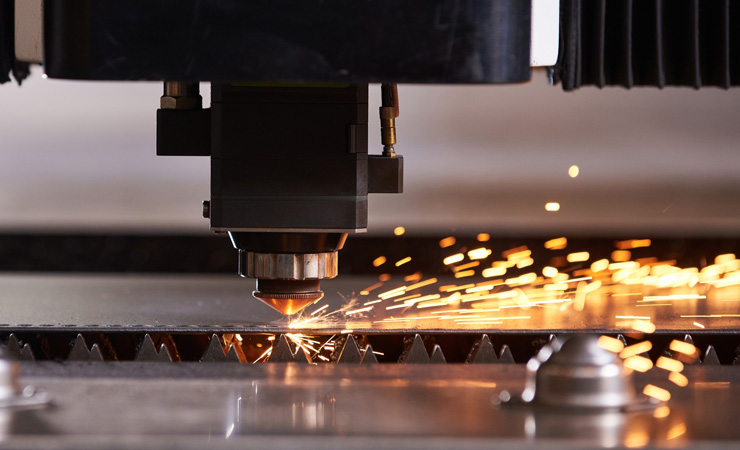
Laser cutting and welded manufacturing are two fundamental technologies frequently used together in modern production processes. Laser cutting ensures precise preparation of parts, while the welding process is used to join these parts. However, the harmony between these two processes directly affects product quality.
Deformations that may occur especially in the welding area can affect previously made precise cuts. Therefore, during cutting planning, weld allowances, material tolerances, and pre-bending shape changes must be taken into account.
Material Preparation and Compatible Design
The preparation of laser-cut parts suitable for the welding process directly affects the welding quality. Details such as edge cleaning, burr removal, and surface suitability prevent errors that may occur during welding. Additionally, accessibility of weld points and thermal expansion behaviors should be considered during the design phase.
Gap tolerances between parts determine both the mechanical strength of the weld and the aesthetic appearance. Therefore, full compatibility between laser cutting precision and welding planning must be ensured.
Production Continuity and Quality Control
In projects where laser cutting and welded manufacturing are carried out together, it is critical that processes proceed without disruption to each other. Therefore, synchronization between stations on the production line, occupational safety measures, and operator experience must be taken into account.
Key factors to consider in laser cutting + welded manufacturing:- Preparation of surfaces for welding after cutting
- Part design against thermal deformation
- Cutting planning according to welding locations
- Determination of quality control points
- Selection of welding technique appropriate to material thickness